


Fueling a Day in the Mountains
Why We Eat

Human existence requires energy. When we eat, chemical reactions change food into energy, create new compounds such as hormones and enzymes, grow bones and muscles, break down and rebuild body tissues, and create energy stores we can access at a later time. All this biological work is powered by ATP - an energy unit that is the end product of metabolism. ATP is also used to power muscle contractions, which allow us to hike, run, ride a bike, ski, ...
All this voluntary movement is on top of the processes that are constantly keeping us alive and require energy as well. Most notably, our brain relies primarily on glucose (which is just another term for blood sugar), alongside a steady stream of oxygen, to function well.
How Do We Use Food for Fuel?
Our cells are the engines that constantly take fuel and turn it into energy for muscle contractions. This fuel can either come from internal stores or what we ingest, with the contribution of each determined by exercise intensity, individual physiology, duration of exercise, and fuel availability.
Where does this fuel come from? When we eat, food is broken down and either used immediately for energy or stored for later use. This process takes time. It can take several hours to fully digest a meal.
Carbohydrates can either be used immediately or stored in muscle and liver as glycogen. Any excess is then converted and stored as fat. The majority of fat can either be stored in adipose tissue or within skeletal muscle, with the proportions of each influenced by fitness and musculature. Protein is broken down into amino acids and used to build tissues and structures in our body.
Of these three macronutrients, only carbohydrates can rapidly contribute meaningful fuel for exercise as they’re being ingested. Fat metabolism is slow, hence ingested fats are only relevant for long-duration exercise, such as all-day activities in the mountains, ultramarathons, or multi-day events. Most of the fat used during exercise comes from body stores instead.
While protein is an essential part of a healthy diet and recovery after training, it is not an efficient fuel source during exercise. ATP production from protein is inefficient and involves the breakdown of body tissues, causing additional stress on the body and being unfavorable for long-term health and training adaptations.

Importance of Balanced Daily Nutrition
When we begin any kind of movement, regardless of intensity, energy is first generated from internal stores of ATP, phosphocreatine, and glycogen. For the first few seconds, the phosphagen system uses stores of ATP and phosphocreatine. This system is very quick to respond but can only work for a short amount of time, as stores of both substrates are very limited.
It does, however, regenerate quickly with sufficient phosphocreatine stores and can later be used again whenever movement requires power, such as sprinting, stepping over a large obstacle, or mountain biking on a steep or technical section.
After about 10 seconds, anaerobic glycolysis becomes a larger contributor, producing energy from glucose in the blood and glycogen stored in muscles. This system can provide energy for about 1-3 minutes, after which oxygen delivery ramps up aerobic metabolism, which then becomes the primary contributor to energy production. This oxidative phosphorylation uses primarily carbohydrates (stored or provided during exercise) and fats to continuously produce energy for sustained exercise.
Balanced daily nutrition is important to ensure these stores, which are essential for efficient energy production when we first start moving, remain full. It is also very important for overall health.
Carbohydrates provide essential energy for daily life, and limiting them puts you at risk for low energy availability, which causes a wide range of health and cognitive issues along with decreased performance. Eating a carbohydrate-rich diet helps the body become better at digesting and utilizing carbohydrates quickly, an essential skill for anyone who wants to move fast, spend long days outside, and enjoy movement.
But carbohydrates alone aren’t enough. When ingested at rest, especially simple and highly processed carbohydrates, they cause blood sugar and consequently insulin to spike. Frequent large spikes from highly refined carbohydrates in the absence of balanced meals may contribute to poor metabolic health over time.
Protein and fats, along with more complex carbohydrates, starches, and fiber, help manage these insulin spikes, regulate blood sugar, increase satiety, keep us full longer, and support overall health. Adequate protein intake is important for tissue repair after exercise, and all of the above provide vitamins and minerals required for the body to function at its best.
Importance of Carbohydrate Intake During Exercise
When aerobic metabolism becomes the main driver of movement, carbohydrates and fats are the primary sources of fuel. The contribution of each depends on how well trained the individual is at metabolizing fat, overall fitness level, and exercise intensity.
Fats yield more ATP per molecule, but carbohydrates can generate it much faster, hence they are preferentially used during high-intensity exercise. At lower intensities, fats contribute a larger proportion of total energy production.
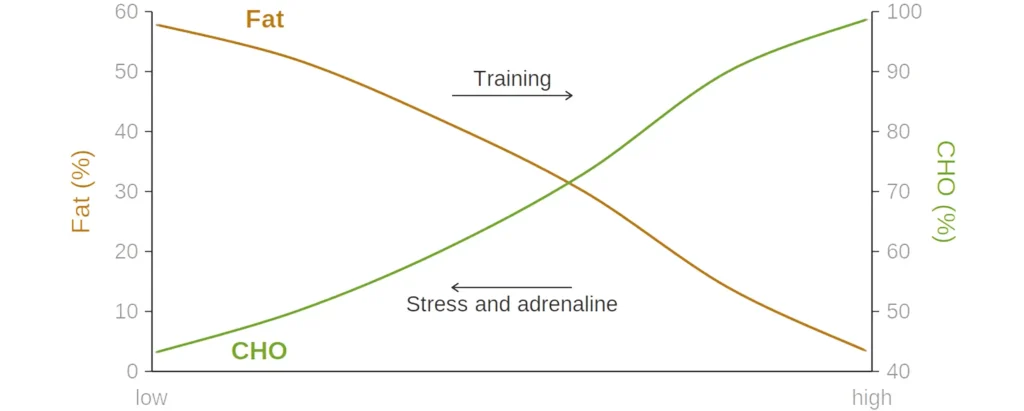
Fats used for movement come from more than 100,000 kcal of available energy stores, mostly in adipose tissue. For most mountain adventures lasting a day or less, they are not going to run out. The more efficient we are at using fat, the less we need to rely on carbohydrates - a much more limited resource.
Well-trained athletes can use a high percentage of fat for energy even at relatively high intensities, allowing carbohydrates to be preserved for longer. We achieve this through a balanced diet, sufficient energy intake, and physical training.
Carbohydrate stores, on the other hand, can run out as quickly as in an hour of very intense exercise, or become substantially depleted within 2-3 hours of moderate training, assuming our stores were fully topped off to begin with.
When muscle glycogen is depleted, we’re forced to slow down so fats can take on a greater percentage of energy contribution, sometimes to an extent where even walking uphill becomes challenging. Since carbohydrates still contribute to some degree at all intensities, depleted glycogen stores increase reliance on blood glucose for fuel, making maintenance of blood sugar more difficult.
As blood glucose is the brain’s primary fuel source, it is heavily regulated and protected. To counteract a drop in blood glucose, the liver breaks down glycogen into glucose to compensate. We only have about 80 g stored there, though, so when those stores run low as well, fatigue rises sharply and sustaining even low-intensity movement such as hiking uphill becomes extremely difficult: the classic "bonk."
Without additional carbohydrate intake, pace often needs to decrease substantially.
This is why eating carbohydrates is so important on any outing that is either intense or long. Eventually, glycogen depletion becomes limiting for all of us. The point at which this occurs differs between individuals, but it exists for everyone.
When a bonk occurs on an easy run with a café, gas station, or our home kitchen nearby, the consequences are minor. On a remote peak without services, however, where both endurance and coordination are required for a safe descent, it can quickly become a serious and dangerous situation.

Frequently Asked Questions
Although fat stores contain a huge amount of energy, carbohydrates can be converted into usable energy much more quickly. As exercise intensity increases, the body's reliance on carbohydrates increases as well.
Glycogen is the storage form of carbohydrates in the human body. It is stored primarily in muscles and the liver and serves as one of the most important energy reserves during exercise.
A bonk occurs when carbohydrate stores become severely depleted and the body can no longer maintain the required rate of energy production. This often results in a sudden drop in energy, pace, and mental clarity.
No. Fat contributes significantly to energy production, especially at lower intensities, but carbohydrates continue to play an important role even during prolonged exercise. Eventually, insufficient carbohydrate availability becomes a limiting factor for most people.
Yes. The body's glycogen stores are built and maintained through daily nutrition. Starting an activity with depleted energy stores can negatively affect both performance and enjoyment long before food carried during the activity becomes relevant.
Protein plays an important role in health, recovery, and tissue repair, but it is not an efficient fuel source during exercise. The body primarily relies on carbohydrates and fats to meet the energy demands of physical activity.
Well-trained athletes often become more efficient at oxidizing fat during exercise. This allows them to preserve limited carbohydrate stores for longer and delay the onset of fatigue.
About the Author
Rea Kolbl is an endurance athlete, mountain biker, trail runner, and adventurer with experience ranging from elite-level competition to self-supported expeditions in remote mountain environments. Her time spent moving through demanding terrain, often at altitude and far from external support, has given her a practical understanding of how nutrition, hydration, and energy management influence both performance and safety. Through her writing, Rea combines real-world mountain experience with evidence-based sports nutrition principles to help others prepare for long days in the outdoors.
About Lyocorner
Lyocorner is an outdoor meal specialist focused on freeze-dried meals, expedition nutrition, and meal planning for hiking, trekking, trail running, bikepacking, mountaineering, and self-supported adventures.
Our goal is to help outdoor enthusiasts better understand their nutritional needs and prepare confidently for longer, safer, and more enjoyable days in the mountains.
Credits
Article: Rea Kolbl (@reakolbl)
Photography: Aljaž Žnidaršič - Expedition Story Production (@aljaz_znidarsic / @expedition.story.production)
Chart data adapted from: Jeukendrup A., Gleeson M. Sport Nutrition: An Introduction to Energy Production and Performanc