


Portable Water Filters and How They Work
A portable water filter removes bacteria, parasites, viruses, chemicals, and microplastics from untreated water sources through mechanical, chemical, or UV-based treatment. The right filter depends on where you are, what the water source is, and what risks it carries.
Water. Most of the planet is covered by it. Most of the human body is made of it. And yet, the share of all Earth's water actually available to drink - not frozen, not saline, not locked underground - is so small it barely registers on a global scale.
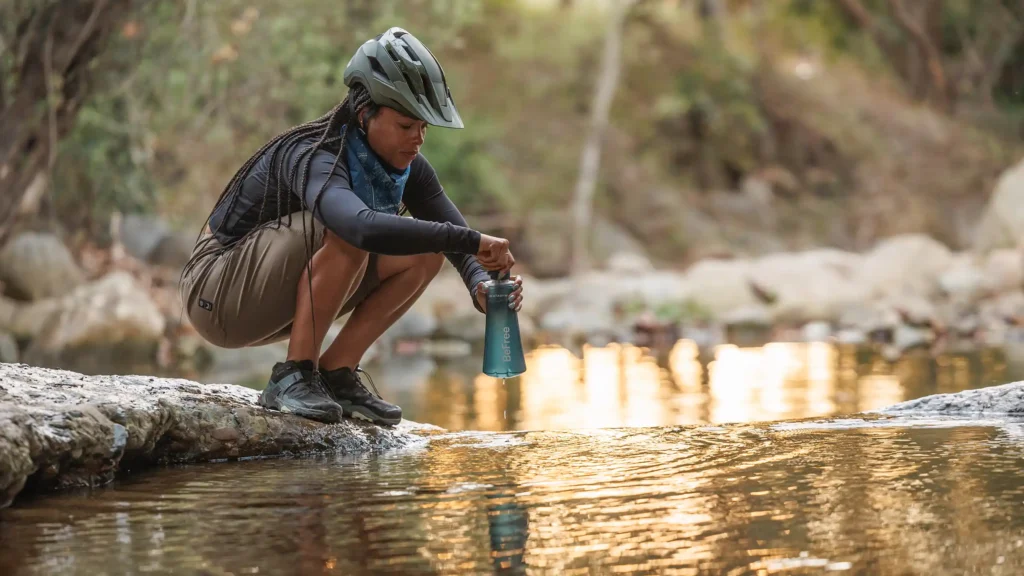
What we do have access to is not always what it appears. Water can look, smell, and taste completely normal while carrying organisms capable of causing serious illness. The problem is invisible. It is measured in microns - units so small that thousands fit across the width of a single human hair (1 μm = 0.001 mm).
According to the World Health Organization, unsafe water is responsible for approximately 505,000 diarrhoeal deaths each year, and more than 3.5 million deaths annually are attributed to waterborne pathogens globally (American Society for Microbiology, 2024). A further 1 in 3 people worldwide do not have access to safe drinking water (UNICEF). These are not abstract statistics. They are the reason portable water filtration exists - and the reason understanding it matters before you choose a filter.
What Contaminants Are Found in Drinking Water?
Drinking water contains three groups of pathogenic microorganisms, each requiring a different level of filtration to remove.

Viruses
Includes Hepatitis A, Rotavirus, and Poliovirus. The smallest and hardest to filter. Most common in areas with poor sanitation or high population density. Standard 0.2 μm mechanical filters do not remove viruses.

Bacteria
Includes E. coli, Salmonella, and Vibrio cholerae (the cause of cholera). The most common cause of waterborne illness worldwide.

Protozoans
Includes Giardia lamblia and Cryptosporidium parvum. Both survive for months in cold water - including clear alpine streams. A single mouthful is enough for infection.
According to the WHO, over 50 pathogens are transmitted through unsafe water. Ten of them account for the greatest global burden of disease, among them E. coli, Salmonella, Cholera, Rotavirus, Hepatitis A, and Cryptosporidium.
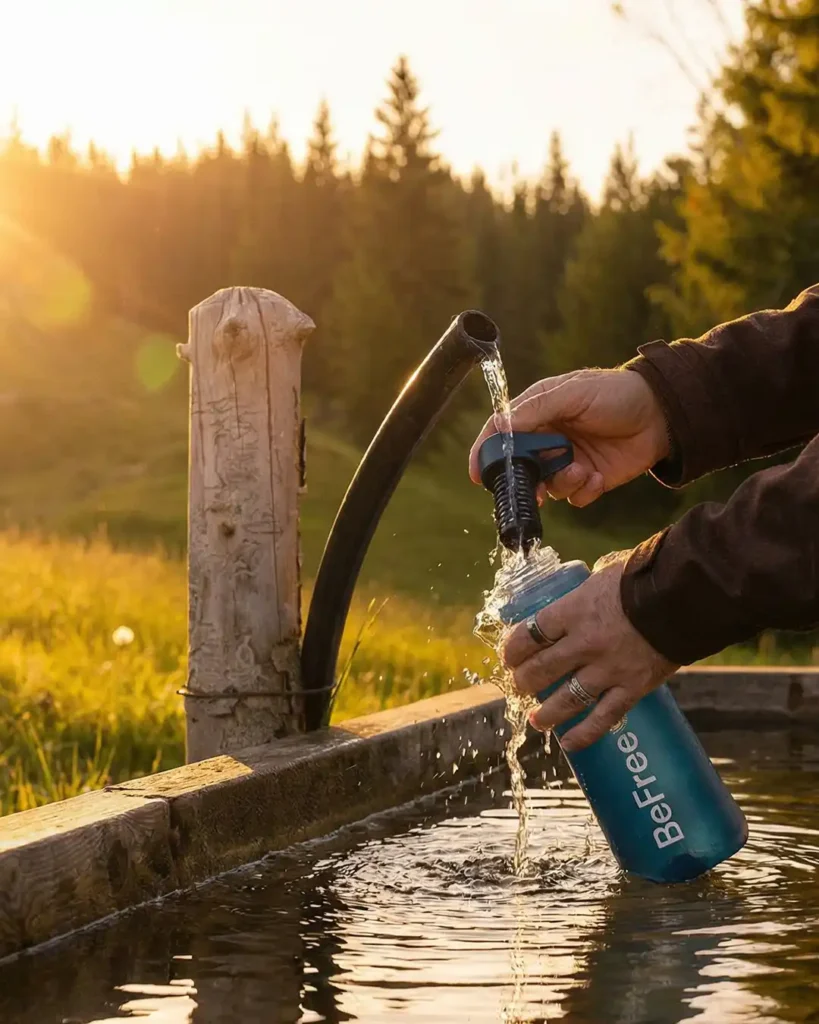
Beyond Pathogens - Chemical and Physical Contamination
Water carries more than biological threats. Turbidity, chemicals, and microplastics present a different kind of risk - one with no biological origin but no less real.
Suspended sediment (sand, silt) clouds water and clogs filters, often masking deeper contamination. Silty water is common in glacial streams, rivers after rainfall, and agricultural areas.
Agricultural and industrial runoff introduces pesticides and heavy metals. These are invisible at molecular scale but persistent in the environment and harmful at low concentrations over time.
Microplastics - fragments from synthetic textiles, packaging, and industrial waste - are now found in virtually every water source on the planet, including remote alpine lakes and bottled mineral water. Research published in Environmental Pollution (2024) confirms microplastics are widespread in drinking water globally, with concentrations varying significantly by region and source. Microplastics adsorb and concentrate chemical pollutants on their surface, carrying them deeper into the water cycle. Their long-term health effects are still under study. Their presence is not in question.
How Do Different Water Filter Technologies Work?
Not all water treatment works the same way. Mechanical filters physically block contaminants. Chemical treatment targets them at a molecular level. UV light disrupts their ability to reproduce. Reverse osmosis is the most thorough option available. The right choice depends on what the water contains - from lead and microplastics in aging city pipes to agricultural runoff in rural valleys or glacial silt in high-altitude streams.
- Ceramic filters use a microporous structure with a pore size of approximately 0.2 μm, trapping bacteria, parasites, and microplastics while allowing water to pass through. They are particularly suited to turbid or silty water, as the ceramic element can be cleaned in the field by scrubbing its surface - restoring flow rate to near-original levels without replacing the cartridge.
- Glass fibre forms a depth filter: superfine fibres arranged within two supporting layers create an extremely large surface area with high capacity to absorb particulate matter. Effective at 0.2 μm against bacteria and parasites.
- Hollow fibre membrane filters act as a physical barrier that water is forced through under gentle pressure. Standard hollow fibre membranes filter at 0.2 μm, removing bacteria, parasites, and larger microplastic particles. Advanced hollow fibre membranes at 0.01 μm - such as those used in the Katadyn BeFree AC - also remove viruses, making them among the most capable portable filter technologies available. Hollow fibre filters are lightweight, fast-flowing, and require no pumping or chemicals. They are the dominant technology in modern lightweight hiking and travel filters, including products from Katadyn, LifeStraw, and MSR.
- Activated carbon works through adsorption rather than mechanical blocking: harmful organic and inorganic substances - including pesticides, chlorine, heavy metals, and microplastics - bind to its large internal surface area. Activated carbon is always used alongside a mechanical filter, not as a standalone treatment. It does not remove bacteria or parasites on its own.

- Silver ions are attracted to bacteria by polar adsorption. After penetrating the cell membrane, the ions damage bacterial DNA, preventing further multiplication. Used as a bacteriostatic agent in some ceramic and glass fibre filter elements. Important note for European buyers: The EU Commission has indicated that certain silver compounds will not be approved for use in biocidal products. Verify the current compliance status of any silver-based product before purchase. For current regulatory guidance, consult the European Chemicals Agency (ECHA).
- Active chlorine is the most widely used water treatment substance worldwide. It works quickly across a broad spectrum of pathogens - including viruses - and is effective in a single treatment. It must be applied at the correct dosage and leaves a residual chlorine taste. Iodine tablets function similarly but are less commonly recommended for extended use.
- UV purifiers destroy pathogens by disrupting their DNA, rendering them unable to reproduce. Effective against viruses, bacteria, and parasites - including Giardia and Cryptosporidium - without any chemical additives, without chlorine taste, without consumable cartridges. The SteriPen range is the most widely used UV purifier for outdoor and travel use in Europe.
- Reverse osmosis forces water through a semi-permeable membrane at 0.0001 μm - the finest filtration available. It removes bacteria, parasites, viruses, chemicals, heavy metals, and microplastics. Typically found in fixed household installations, though compact portable units exist for marine and expedition use. Not practical for day hiking due to weight, cost, and flow rate.
|
Technology |
Type (Pore size) |
Effective against |
|---|---|---|
|
Ceramic |
Mechanical (0,2 μm) |
Bacteria, parasites, microplastics |
|
Glass fibre |
Mechanical (0,2 μm) |
Bacteria, parasites |
|
Hollow fibre |
Mechanical (0,01–0,2 μm) |
Bacteria, parasites, microplastics, viruses* |
|
Activated carbon |
Adsorption, molecular |
Chemicals, heavy metals, microplastics |
|
Chlorine |
Chemical |
Bacteria, viruses |
|
Silver |
Chemical |
Bacteria |
|
UV |
UV |
Bacteria, parasites, viruses |
|
Reverse osmosis |
Membrane (0,0001 μm) |
Bacteria, parasites, viruses, chemicals |
*Effective against viruses only with advanced hollow fibre membranes at 0,01 μm.
Which Water Filter Should I Use for My Water Source?
Choosing the right filter starts with understanding the water source and the likely contamination profile.
- Mountain and alpine water (Alps, Dolomites, Julian Alps) - Bacteria and parasites dominate at altitude. Viral load is typically low in remote high-altitude streams. A standard 0.2 μm hollow fibre filter - such as the Katadyn BeFree or similar - is sufficient for most alpine trekking in the European mountains. A ceramic filter is a reliable alternative where field maintenance may be required.
- Silty or turbid water (rivers, lowland streams, glacial runoff) - Ceramic filters are the standard for heavily silted water. Unlike hollow fibre membranes - which can clog irreversibly with fine silt - a ceramic element can be scrubbed clean in the field, restoring flow rate without requiring replacement.
- Urban or tap water (chemicals, lead, taste) - Ageing infrastructure in many European cities introduces lead, microplastics, and residual chlorine into the supply. Activated carbon filtration adsorbs these contaminants and improves taste significantly. The Katadyn BeFree AC combines hollow fibre filtration with an activated carbon stage - covering both biological and chemical risks in a single bottle.
- Tropical regions and areas with poor sanitation - Viruses are a significant risk wherever sanitation infrastructure is inadequate - including parts of Southeast Asia, sub-Saharan Africa, Central America, and South Asia. Combine mechanical filtration with UV treatment or chemical disinfection (chlorine tablets) for complete coverage.
- Multi-day expeditions or unknown sources - For the broadest possible coverage with unknown water sources, use a multi-stage system: mechanical filtration (0.2 μm or finer) combined with UV disinfection or chemical treatment. The Katadyn Explorer Pro pump filter is designed for exactly this scenario - three-stage Swiss-made filtration for field use in demanding environments.
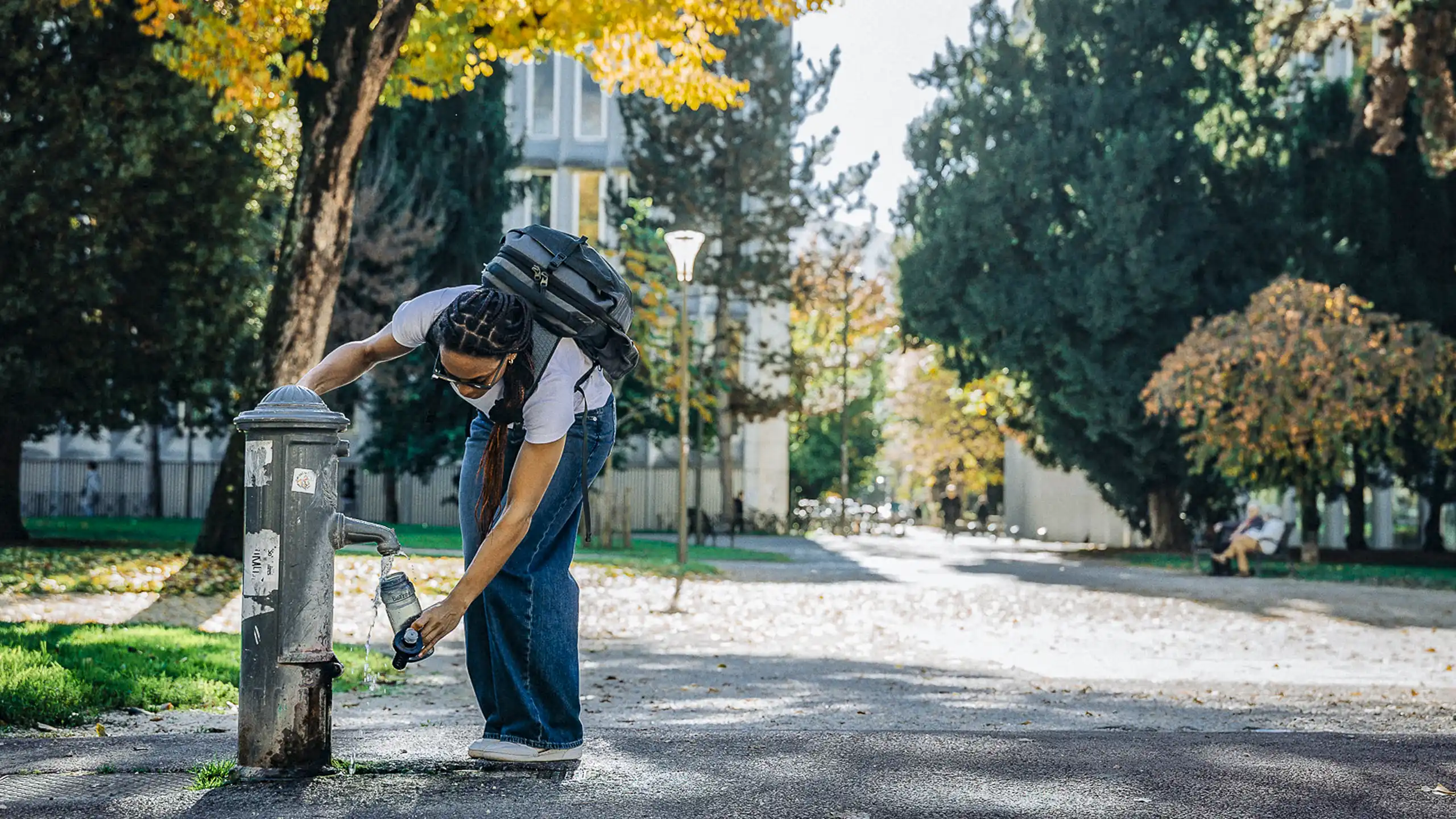
Field Notes: What Most Filter Guides Don't Tell You
Ceramic filters and field maintenance Ceramic filters are underrated for extended European river travel. Hollow fibre membranes can clog irreversibly when exposed to fine silt. A ceramic element can be restored in the field simply by scrubbing its surface with an abrasive pad, bringing flow rate back to close to 100%. For multi-day trips on silty rivers, ceramic is the more practical long-term choice.
Freezing damage in hollow fibre filters Hollow fibre membranes are vulnerable to freeze damage. Residual water inside the tubes expands when frozen, causing microscopic cracks that allow pathogens to pass through unfiltered - compromising the filter's integrity with no visible indication. If you are trekking in the Alps during winter or in sub-zero temperatures, store your hollow fibre filter in an inner jacket pocket, close to body heat. Never use a hollow fibre filter that has frozen without first confirming it has not been compromised.
Taste and odour: when a 0.2 μm filter is not enough A standard 0.2 μm mechanical filter removes biological contaminants but does nothing for the earthy taste caused by geosmin - a compound produced by algae and cyanobacteria in stagnant or slow-moving water. If filtering from lakes, reservoirs, or lowland rivers, an activated carbon stage is essential - not for safety, but to make the water palatable enough to maintain consistent hydration.
Silver compounds and EU regulation The EU Commission has indicated that certain silver compounds will not be approved under the Biocidal Products Regulation. The review of silver as an active substance in water treatment is ongoing. For current compliance status in your country, consult the European Chemicals Agency (ECHA) before purchasing any silver-based filter treatment.
Frequently Asked Questions
A portable water filter is a compact device that removes biological, chemical, or physical contaminants from untreated water sources - including rivers, lakes, streams, and taps - making the water safe to drink. They use technologies including hollow fibre membranes, ceramic elements, activated carbon, UV light, or a combination of these. Most portable filters are designed for hiking, travel, outdoor expeditions, or emergency preparedness.
Most standard portable water filters with a 0.2 μm pore size do not remove viruses. They are effective against bacteria (including E. coli and Salmonella) and parasites (including Giardia and Cryptosporidium) but viruses pass through at 0.02–0.2 μm. Virus removal requires either an advanced hollow fibre membrane rated to 0.01 μm, UV treatment (such as a SteriPen), or chemical disinfection with chlorine or iodine tablets.
A water filter physically removes contaminants by passing water through a membrane or porous medium - typically covering bacteria and parasites. A water purifier goes further, also eliminating viruses, either through UV treatment, chemical disinfection, or ultrafiltration at 0.01 μm. The word "purifier" indicates full-spectrum pathogen coverage including viruses; "filter" alone does not guarantee this. When choosing a product for travel in regions with poor sanitation, look specifically for the term "purifier" or confirm virus removal in the product specifications.
For alpine hiking in the European mountains (Austrian Alps, Slovenian Alps, Dolomites, Swiss Alps), bacterial and protozoal contamination are the primary risks - viral load is typically low in remote high-altitude streams. A 0.2 μm hollow fibre squeeze filter, such as the Katadyn BeFree, provides fast flow rates, minimal weight, and reliable protection for this environment. For winter alpine use, be aware of freeze risk to hollow fibre membranes and store the filter close to your body.
Filter lifespan depends on the technology and usage conditions. Hollow fibre membranes typically filter 1,000–2,000 litres before performance degrades. Ceramic elements last significantly longer and can be field-cleaned by scrubbing, restoring flow rate repeatedly over the life of the cartridge. Activated carbon stages have a fixed adsorption capacity and should be replaced on the manufacturer's schedule regardless of flow rate. Pump filters with glass fibre depth elements (such as the Katadyn Explorer Pro) use a filter life indicator to signal when replacement is required.
Yes, partially. Ceramic filters and hollow fibre membranes rated at 0.2 μm or finer are capable of mechanically removing microplastic particles above that threshold. Activated carbon adsorbs microplastics and the chemical pollutants they carry on their surface. For the most comprehensive portable microplastic removal, a filter combining a 0.2 μm or finer membrane with an activated carbon stage - such as the Katadyn BeFree AC - is currently the most effective portable option available.
Tap water in Slovenia meets EU drinking water standards and is generally safe to drink directly from the tap in most municipalities. However, in older buildings with ageing pipework, trace levels of lead or microplastics may be present. For travel within Slovenia - particularly in mountain huts, rural areas, or when drawing from natural sources - filtration is recommended.
For travel in regions with inadequate sanitation infrastructure, viruses are a significant additional risk that standard 0.2 μm mechanical filters do not address. The recommended approach is a multi-stage method: a mechanical filter rated to 0.2 μm or finer (to remove bacteria, parasites, and sediment) combined with UV treatment or chlorine-based chemical disinfection (to address viruses). Alternatively, a purifier rated to 0.01 μm hollow fibre covers viruses in a single portable unit.
Have a Question About Water Filters?
Our team uses and tests the products we sell. If you need advice on which filter suits your situation - whether you're trekking the Julian Alps, planning an expedition, or simply want cleaner tap water at home - we are here to help.
Write to us at [email protected] or call +386 4 279 11 01.
Browse our full range of portable water filters and filtration accessories at lyocorner.com.